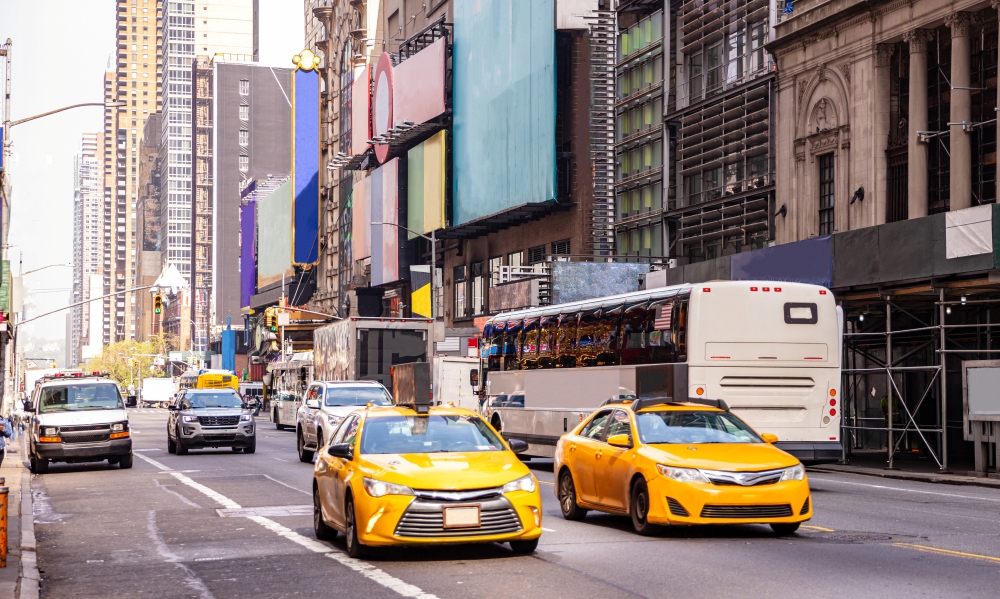
UPDATE: The hearing originally scheduled for June 17 has been deferred to October 20, 2026 at noon Eastern. The sample letter below has been changed to reflect the new date.
The New York City Council is considering the Proposed Int. No. 11-A, which would sharply increase penalties on private motorcoach operators — with maximum fines rising to $7,500 per violation, a 275% increase.
ABA opposes this bill, and we need members to submit written comments.
The message is simple: treat buses equally.
New York City already recognizes that school buses and transit buses are different from ordinary vehicles. They are treated differently under the law and in this proposed legislation because they carry large numbers of people and provide an essential public benefit.
Private motorcoaches do the same.
Motorcoaches serve the same riding public: students, seniors, tourists, workers, veterans, people with disabilities, convention attendees, and group travelers. They reduce congestion, take cars off the road, and help move people through New York safely and efficiently.
This proposal would punish private motorcoach companies for basic safety and service needs: performing pre-trip safety inspections, maintaining vehicle systems, operating wheelchair lifts, protecting passengers with disabilities, and keeping passengers and drivers safe from uncontrolled cabin temperatures.
That means fewer buses, fewer group tours, fewer visitors, and more uncertainty for operators trying to serve New York City safely and responsibly.
You can use the sample draft below to submit your comments up to 3 days after the close of the hearing. Send all comments to testimony@council.nyc.gov. For best impact, use your company letterhead and personalize the sample comment below with information about your company, your passengers, and your experience operating in New York City.
Sample written comment for use
Re: Opposition to Proposed Int. No. 11-A
Chair and members of the Committee:
My name is [NAME], and I am with [COMPANY]. We operate motorcoaches that bring passengers to New York City for tours, school trips, events, meetings, conventions, and other group travel.
I am writing to oppose Proposed Int. No. 11-A, which is being considered by the New York City Council Committee on Environmental Protection during its hearing on Tuesday, October 20 at 12:00 p.m.
This bill would increase fines for private motorcoach operators to up to $7,500 per violation, a 275% increase. That is not a reasonable penalty structure. It would punish companies that are trying to operate safely, reduce congestion, serve passengers with disabilities, maintain vehicle systems, and protect passengers and drivers from unsafe cabin temperatures.
Buses are not idling for convenience. Systems need to run for safety, accessibility, climate control, inspections, or passenger protection. That includes operating wheelchair lifts, maintaining safe cabin temperatures, keeping equipment functioning properly, and protecting passengers and drivers during extreme weather. This also includes compliance with federal safety regulations.
This proposal also creates an unfair and inconsistent standard for buses.
New York City already recognizes that school buses and transit buses are different from ordinary vehicles. They are treated differently under current law and under proposed legislation because they carry large numbers of people and provide an essential public benefit.
Private motorcoaches provide the same public benefit. We serve the same riding public, including students, seniors, veterans, tourists, workers, people with disabilities, convention attendees, and other group travelers. We reduce congestion, take cars off the road, and help move people through New York more efficiently.
A single motorcoach can take up to 35 cars off the road, reducing congestion and lowering emissions from personal vehicles. Independent research has found that buses are the most sustainable form of mass transportation, emitting less carbon per passenger mile than trains, vanpools, taxis, transit buses, ferries, and planes.
If the City’s goal is cleaner, safer, more efficient transportation, it should not punish private motorcoaches while treating other buses differently under the law. That unequal treatment undermines the credibility of the City’s environmental argument and sends the wrong message to companies that are helping reduce congestion and emissions.
The Council should treat buses equally.
The current enforcement program is already creating major costs and compliance burdens. A recent survey by the American Bus Association found that operators are facing a median annual impact of $ 50,000 from the current program. When asked about higher fines, 33% of responding operators said they would stop operating in New York City entirely, and nearly 40% said they would significantly reduce trips.
That should concern the Council. If this bill passes, fewer motorcoaches will serve New York City. That will hurt students, seniors, tourists, veterans, people with disabilities, hotels, restaurants, theaters, museums, attractions, small businesses, and the broader New York visitor economy.
According to the American Bus Association Foundation, the private motorcoach and group travel industry supports nearly $13 billion in annual economic output in New York, including approximately $4.4 billion in wages, 59,200 jobs, and $2.5 billion in tax revenue. These are real businesses, real workers, and real visitors who help support New York’s economy.
I respectfully urge the Council to reject Proposed Int. No. 11-A and work with the bus industry on a practical policy that treats buses equally, protects safety and accessibility, supports cleaner transportation, and preserves responsible motorcoach service in New York City.
Sincerely,
[NAME]
[TITLE]
[COMPANY]
What ABA Members Should Do
Please submit written comments opposing Proposed Int. No. 11-A, which is being considered during a hearing of the New York City Council Committee on Environmental Protection on Wednesday, June 17, 2026 at 12:00 p.m. Eastern Time.
Use your company letterhead and personalize the sample comment below with information about your company, your passengers, and your experience operating in New York City.
Written testimony may be submitted up to 3 days after the close of the hearing