Site to make it easier for commercial tour operators to expedite park entrance fees and passes for clients
The National Park Service (NPS) has announced new Recreation.gov features that make it easier for commercial tour operators to purchase park entrance fees and passes in advance for their clients.
As a reminder, beginning January 1, 2026, the 11 most-visited national parks began charging a $100 non-resident fee for visitors age 16 and older who are not U.S. residents. This fee is charged in addition to the standard park entrance fee.
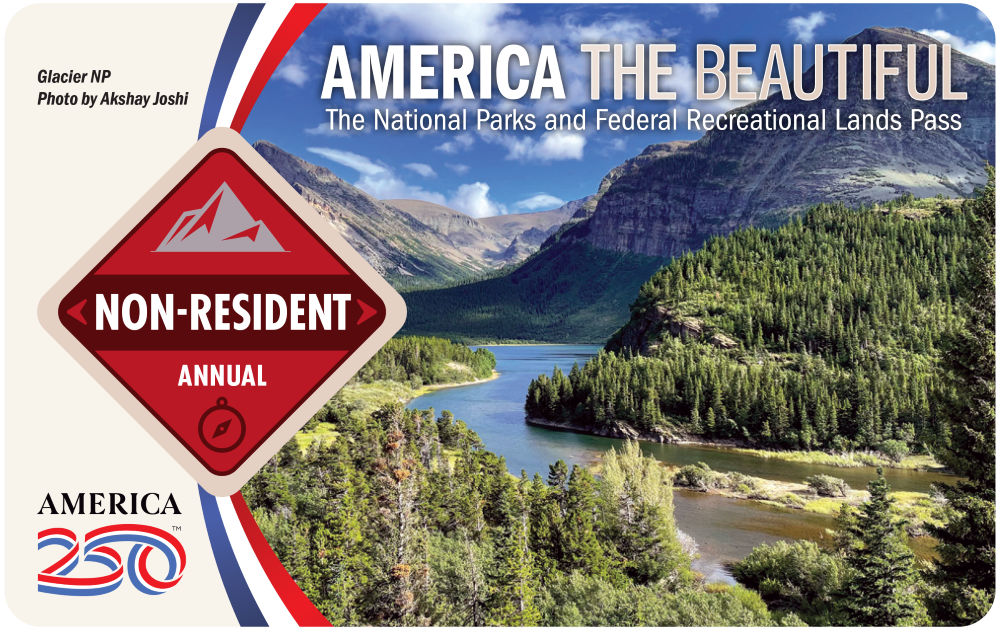
To provide greater flexibility for international travelers visiting multiple parks, NPS also introduced the America the Beautiful Non-Resident Annual Pass. Available for $250, the pass covers both park entrance fees and applicable non-resident fees for the passholder and eligible accompanying travelers for one year from the date of purchase.
Since implementation, commercial tour operators have incorporated these new requirements into their operations. However, purchasing entrance fees and passes for large groups at park entrance stations has, in some cases, increased transaction times and contributed to congestion.
To help streamline the arrival process, NPS and Recreation.gov have expanded advance purchase capabilities for commercial tour operators. New features include:
- Pre-purchase of commercial entrance fees at the 11 participating parks, including applicable non-resident fees.
- Advance purchase of America the Beautiful Non-Resident Annual Passes on behalf of tour participants.
- Expanded digital pass options designed to reduce transaction times at park entrance stations.
These enhancements are intended to improve operational efficiency for tour operators while helping reduce delays at park entrances and creating a smoother experience for visitors and gateway communities.
Commercial tour operators can find step-by-step instructions for using these new features in the Recreation.gov Help Center.
Protecting Commercial Tour Operators in GAOA 250
While these operational improvements are welcome, ABA continues to advocate for policies that recognize the essential role commercial tour operators play in providing access to America’s national parks.
As part of these efforts, ABA has been actively engaged in discussions surrounding the bipartisan Great American Outdoors Act 250 (GAOA 250), which is expected to pass Congress and be signed into law by the President as early as July 1, 2026. Throughout the legislative process, ABA has worked to ensure the legislation recognizes the needs of commercial tour operators and supports practical implementation of new park access and fee collection policies.
Working alongside the International Inbound Travel Association (IITA), National Tour Association (NTA), and U.S. Travel Association (USTA), ABA recently led a coalition letter to congressional policymakers outlining the industry’s priorities for the legislation.
ABA’s early engagement with lawmakers and committee staff also resulted in a significant advocacy victory: the removal of draft language that would have dramatically increased commercial tour fees.
In the letter, the coalition reaffirmed its support for investments that preserve America’s public lands, improve visitor experiences, and address long-standing infrastructure needs, while emphasizing that new funding mechanisms should not disproportionately burden commercial tour operators or the visitors they serve. The coalition also urged Congress to direct the National Park Service to implement annual, systemwide reporting on commercial tour activity, providing better data to inform future policy decisions related to visitor access, transportation, and park operations.
ABA’s early engagement with lawmakers and committee staff also resulted in a significant advocacy victory: the removal of draft language that would have dramatically increased commercial tour fees. Eliminating that proposal helped avoid substantial new costs for commercial operators and their passengers while preserving affordable access to national parks for millions of group travelers.
The legislation would invest $1.9 billion annually over the next five years in national parks, public lands, and Bureau of Indian Education facilities, strengthening the destinations that are central to many group travel itineraries. For commercial tour operators, these investments mean improved roads, visitor centers, trails, restrooms, and other critical infrastructure that enhance the guest experience while helping parks accommodate growing visitation. The bill also supports rural gateway communities that depend on tourism, helping ensure the hotels, restaurants, attractions, and local businesses that serve group travelers remain strong.
ABA will continue working with Congress and the National Park Service as GAOA 250 is implemented to ensure commercial tour operators have practical, efficient tools—like the new Recreation.gov advance purchase options—and that future park policies continue to support the motorcoach and group travel industry’s vital role in connecting visitors with America’s public lands.