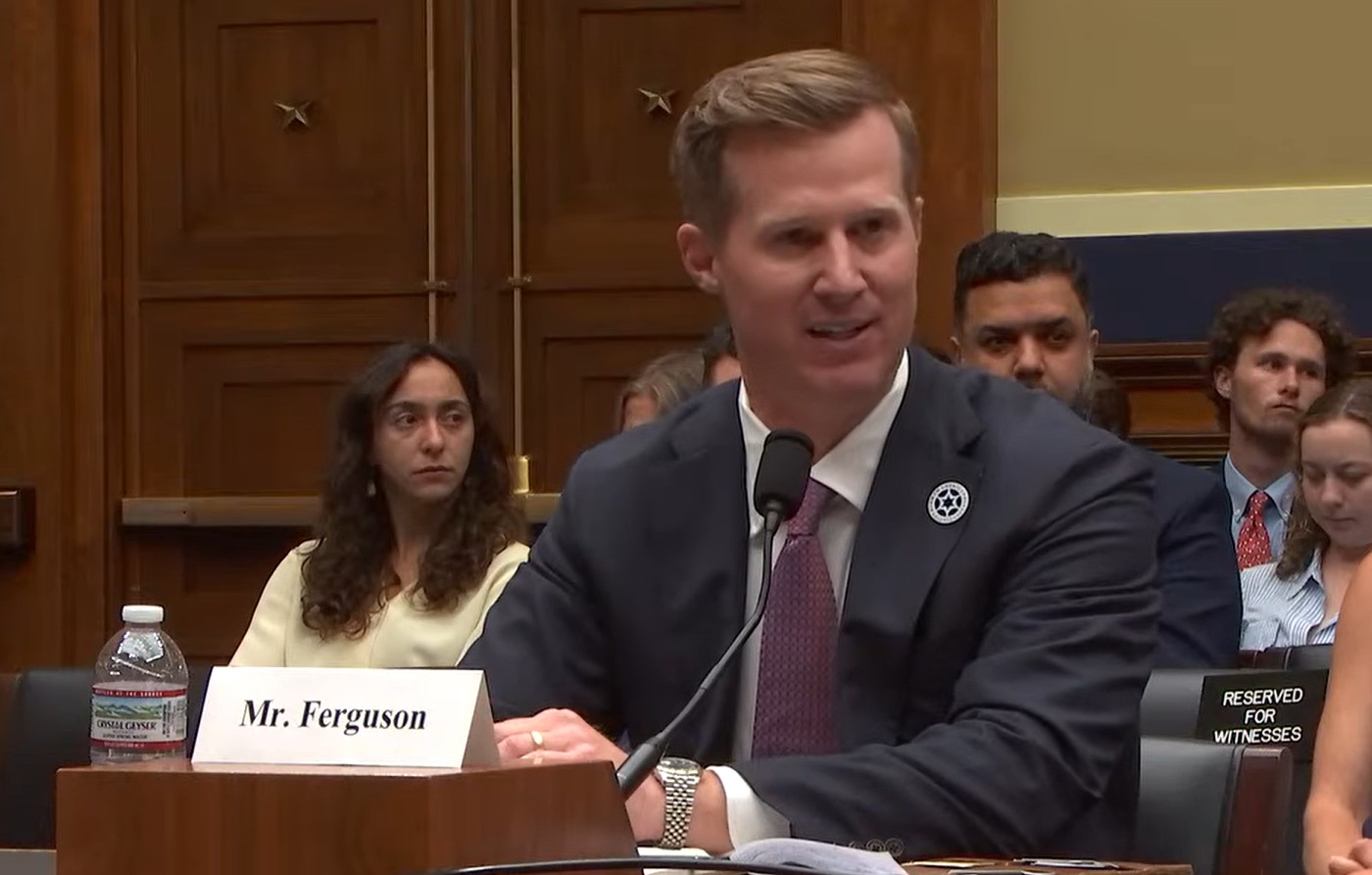
On June 3, 2026, ABA President & CEO Fred Ferguson testified before the House Energy and Commerce Committee’s Subcommittee on Environment during a hearing titled “Rules of the Road: Examining Legislation to Modernize the Clean Air Act’s Mobile Source Requirements.”
Ferguson appeared before the Subcommittee to urge Congress to advance the Buses Utilizing Safety and Environmental Standards (BUSES) Act. This bipartisan legislation, co-led by Rep. Nick Langworthy (R-NY) and Rep. Josh Gottheimer (D-NJ), would establish reasonable federal guardrails for over-the-road bus idling rules. Specifically, this proposal would prevent states and localities from enforcing idling restrictions on over-the-road buses for periods of less than 15 minutes, prohibit bounty-style enforcement mechanisms tied to bus idling violations, and prevent Clean Air Act citizen suits based on those restrictions.
In his testimony, Ferguson emphasized that ABA supports reducing unnecessary idling and continued environmental progress, but warned that increasingly aggressive local enforcement systems are creating serious operational, safety, accessibility, and interstate commerce challenges for private motorcoach operators.
“The question is not whether unnecessary idling should be reduced,” Ferguson stated in his testimony. “The question is whether federal law should recognize the distinction between avoidable idling and limited operational idling necessary to satisfy federal safety obligations and safely transport passengers.”
Ferguson explained that modern motorcoaches are federally regulated commercial passenger vehicles that often require limited engine operation before entering service. Pre-trip safety inspections, air brake systems, passenger-entry doors, suspension systems, wheelchair lifts, kneeling systems, windshield defogging, emissions-control systems, and passenger climate control all depend on engine operation.
During questioning, Rep. Buddy Carter (R-GA) focused on the need to modernize Clean Air Act-related policy so that well-intended environmental rules reflect today’s transportation realities. Carter noted that motorcoaches help take cars off the road and asked what Congress can do to ensure bus operators are not penalized for routine operational activity tied to safety and accessibility. Ferguson pointed to the BUSES Act as a practical framework that would allow operators to complete federally required pre-trip safety inspections, prepare vehicles for service, and protect passengers without incurring unreasonable local penalties.
Ferguson also emphasized that the motorcoach industry has already achieved significant environmental progress through predictable standards, cleaner engines, and ongoing innovation. He noted that long-term regulatory certainty has helped drive significant reductions in nitrogen oxides and particulate matter, and that the industry continues to invest in cleaner and more efficient technology. However, Ferguson cautioned that New York City’s current enforcement system targets private motorcoach operators while treating other passenger transportation providers differently, creating an uneven framework that undermines one of the cleanest modes of transportation.
Rep. Laurel Lee (R-FL) highlighted the importance of the motorcoach industry to Florida’s economy, noting that it supports $7.5 billion in economic output and 43,000 jobs in the state. Lee asked how local idling restrictions and overlapping regulatory burdens affect passenger affordability. Ferguson explained that motorcoaches are federally regulated commercial passenger vehicles, whether they operate in Florida, New York, or anywhere in between, and that drivers must still complete safety-related pre-trip activities that can take approximately 15 minutes. When local ordinances conflict with federal operational requirements, operators traveling across state lines are left navigating inconsistent rules that increase costs and uncertainty.
Ferguson added that those costs ultimately affect the people and communities motorcoach operators serve. He noted that fines and compliance burdens divert resources from workforce development, fleet investment, and passenger service, citing Academy Express, a well-regarded operator that incurred approximately $120,000 in idling fines in a single day. Ferguson reiterated that ABA’s focus is on protecting passengers and drivers, supporting safe interstate transportation, and ensuring that policies do not undermine one of the cleanest and most efficient ways to move large groups of people.
Rep. John Joyce (R-PA) examined how overly strict regulations and de facto electric vehicle mandates could affect transportation access, particularly in rural communities. Joyce asked whether such mandates could limit motorcoach service and who would ultimately bear the increased costs. Ferguson explained that electric motorcoaches can cost roughly twice as much as conventional vehicles, meaning local business owners and customers would likely absorb those costs if adoption is forced before the market and infrastructure are ready.
Ferguson stressed that the motorcoach industry is not opposed to electric vehicles or alternative propulsion technologies. Rather, he said, operators need realistic lead time, workable infrastructure, and cost predictability so they can continue serving schools, sports teams, community groups, rural passengers, and interstate travelers. He also noted that ABA survey data already shows the consequences of unworkable local restrictions: approximately 35 percent of directly affected operators have reduced trips into New York City, approximately 20 percent have declined specific charters or contracts, and roughly 10 percent have stopped or nearly stopped New York City operations entirely. Operators also reported median annual business impacts exceeding $50,000 per company.
The hearing also reflected bipartisan recognition that the issue deserves a practical solution. Democratic members, including Rep. Scott Peters (D-CA) and Rep. Greg Landsman (D-OH), acknowledged the importance of working toward a solution that addresses the challenges facing motorcoach operators while preserving clean air goals. ABA appreciates their willingness to engage constructively on the issue and looks forward to working with members on both sides of the aisle.
The hearing also included an important acknowledgment from the Sierra Club witness that bus travel is the most sustainable form of transportation. ABA strongly agrees. Motorcoaches are among the most environmentally efficient passenger transportation modes in the country, carrying large numbers of passengers while reducing congestion, fuel consumption, vehicle miles traveled, and emissions compared to less efficient travel alternatives.
A single full motorcoach can remove as many as 35 passenger vehicles from congested roadways. The motorcoach industry has also made major investments in cleaner technology, including modern clean-diesel engines, diesel particulate filters, selective catalytic reduction systems, idle-reduction technologies, fleet modernization, and operational efficiency improvements.
“Motorcoaches are already part of the clean transportation solution,” Ferguson said. “Punishing bus operators for limited, safety-related idling risks pushing passengers toward less efficient modes of travel, increasing congestion, and undermining the environmental benefits buses provide every day.”
ABA thanked Reps. Nick Langworthy and Josh Gottheimer for their leadership on the bipartisan BUSES Act and for recognizing the need to balance clean air goals with passenger safety, accessibility, interstate commerce, and the operational realities of modern motorcoach service.
The BUSES Act does not eliminate anti-idling laws, authorize unlimited engine operation, or weaken national air quality goals. Instead, it establishes a narrow, reasonable federal standard that distinguishes between unnecessary idling and limited operational idling necessary to safely transport passengers.
ABA looks forward to continuing to work with Congress, federal agencies, state and local officials, environmental stakeholders, and industry partners to advance a balanced solution that protects clean air, supports safe passenger transportation, and preserves access to affordable, efficient, and sustainable motorcoach service nationwide.