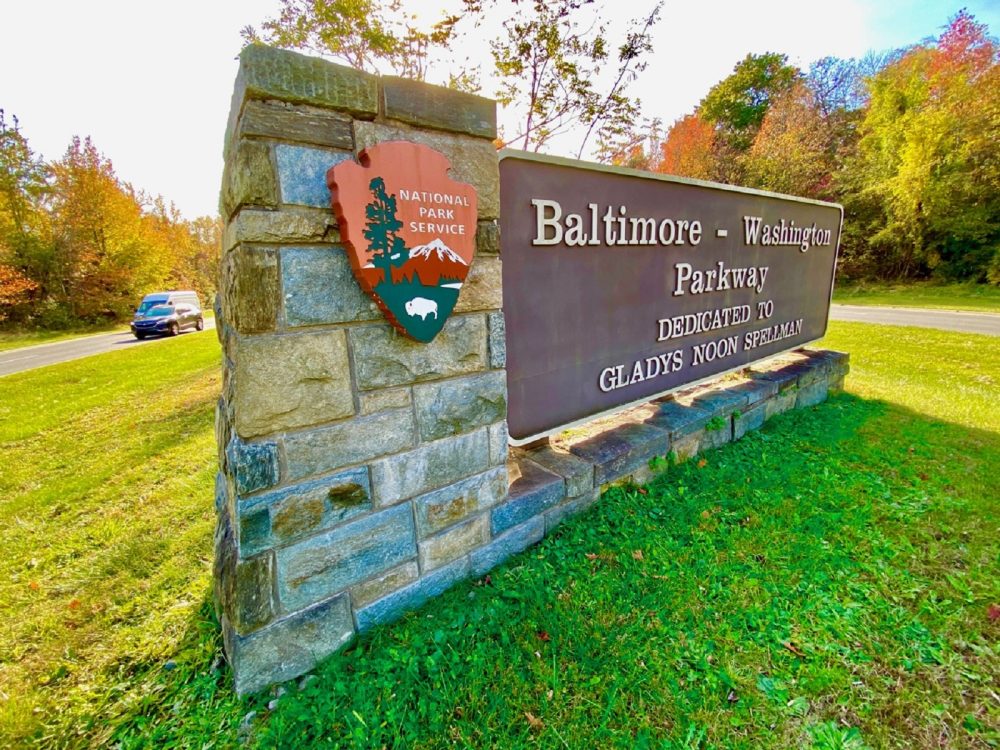
Recent enforcement activity on the Baltimore-Washington Parkway is not the result of a new regulation.
The commercial vehicle prohibition on the National Park Service-managed section of the parkway has been in place for decades, but ABA has been advised that enforcement has historically been inconsistent. That inconsistency may explain why some operators avoided citations in the past. The message now is different: enforcement is increasing, and operators should treat the restriction as active and consequential. NPS has repeatedly stated that commercial vehicles are prohibited on the Baltimore-Washington Parkway, and U.S. Park Police recently said they conducted commercial vehicle traffic enforcement on the roadway.
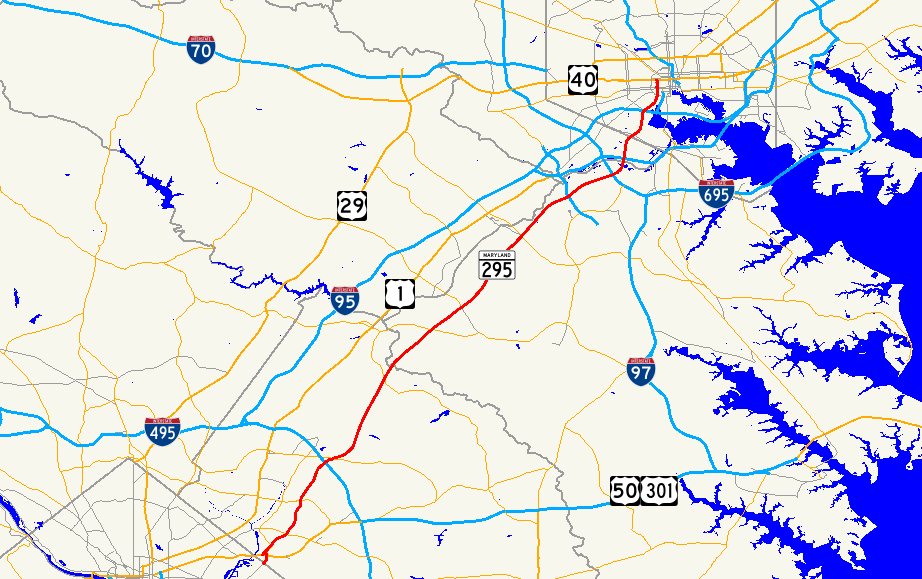
For operators, the critical stretch is the National Park Service section of the Baltimore-Washington Parkway, which NPS defines as extending from the Washington, D.C., boundary to MD 175. NPS describes the roadway as a scenic parkway and formal entrance to the nation’s capital, and says commercial vehicles, buses, and trucks over 10,000 pounds are prohibited because the roadway was not designed to accommodate that type of traffic. That is an important operational distinction: this is not simply a preferred-route issue. It is a federal parkway restriction on a roadway built for a different purpose.
ABA has also been advised by U.S. Park Police that the same broader enforcement posture applies to other National Park Service roadways in the region, including the George Washington Memorial Parkway and the Clara Barton Parkway. That aligns with current NPS public guidance, which says trucks and commercial vehicles are restricted on George Washington Memorial Parkway and Clara Barton Parkway, and with Clara Barton Parkway guidance stating that commercial vehicles with more than four wheels, including buses, are not permitted on the restricted roadway segment.
The legal consequences deserve close attention. ABA has been advised that when a commercial vehicle is stopped on one of these parkways, the violation may be handled as a federal criminal matter rather than a routine local traffic ticket. Under federal law, violations of National Park Service regulations are punishable by up to six months imprisonment and fines; because a six-month maximum falls within the federal Class B misdemeanor range, operators may face criminal citations and, depending on the circumstances described by Park Police, possible arrest. Operators should therefore treat this as a serious compliance issue, not a discretionary routing risk.
According to recent communication from U.S. Park Police, operators should be familiar with 36 CFR §§ 5.6, 4.11, 5.4, and 7.96. Those provisions form the core federal framework for commercial vehicle restrictions on park roads, size-and-weight limits, commercial passenger-carrying rules, and National Capital Region-specific restrictions. Publicly available federal regulations make clear that commercial vehicle use on park roads is generally prohibited unless specifically authorized, and that permits are limited rather than routine. For the National Capital Parks-East area, the superintendent’s compendium states that permits for commercial vehicles are issued only to access private lands within or adjacent to the park when other access is unavailable. In other words, operators should not expect a general permit process for routine through-travel on the Baltimore-Washington Parkway.
The practical takeaway is straightforward: charter and commercial operators should not route buses on the NPS-managed section of the Baltimore-Washington Parkway. Instead, trips into Washington should be planned using designated truck and bus routes and reviewed in advance through the District’s official Truck & Bus Map and Motorcoach Guide. goDCgo says operators should review destinations and routes before entering the city and use the official map and motorcoach guide for restrictions, routing, parking, and pick-up/drop-off planning. Destination DC likewise directs operators to current motorcoach regulations, permitting information, and routing resources.
Operators also need to separate the Baltimore-Washington Parkway restriction from District permitting requirements. DC DMV says apportioned buses do not require trip permits, while non-apportioned buses do. The agency states that motor carriers and chartered buses that are not apportioned or fully registered in the District may obtain a trip permit, which costs $50 and is valid for 6 days.
ABA encourages members to brief dispatchers, planners, and drivers now. This is not a new rule, but it is clearly receiving renewed enforcement attention. Members should plan alternate routings, verify District permit requirements before entering Washington, and avoid assuming that past experience without citation reflects current enforcement reality.
Given the increased enforcement posture and the potential consequences for operators, ABA is exploring a virtual informational session with U.S. Park Police so members can hear directly from officials on compliance expectations, routing, and operational guidance.
Operator Resources
Washington-Baltimore Parkway
Important information for bus and tour operators regarding the B-W Parkway.
National Park Service
Are there commercial vehicles allowed on the parkway?
No, commercial vehicles are prohibited on the Baltimore-Washington Parkway.
DC DMV
Apportioned buses do not require Trip Permits. However, Non-Apportioned buses require Trip Permits.
goDCgo's Motorcoach Services Guide
Several distinct types of motorcoach services are provided in the District.
Destination DC's Motorcoach Guide and Parking Regulations
Important information for motorcoach operators and drivers.